
Badosa and Masarova Set the Clay-Court Tone as Wimbledon Heavyweights Return to Centre Stage
Paula Badosa delivered one of the cleanest performances of the day on the WTA Challenger circuit, while tightly contested clay matches in Contrexeville, Trieste and Bogota framed a schedule now turning toward major Wimbledon tests for Jannik Sinner, Novak Djokovic and Naomi Osaka.
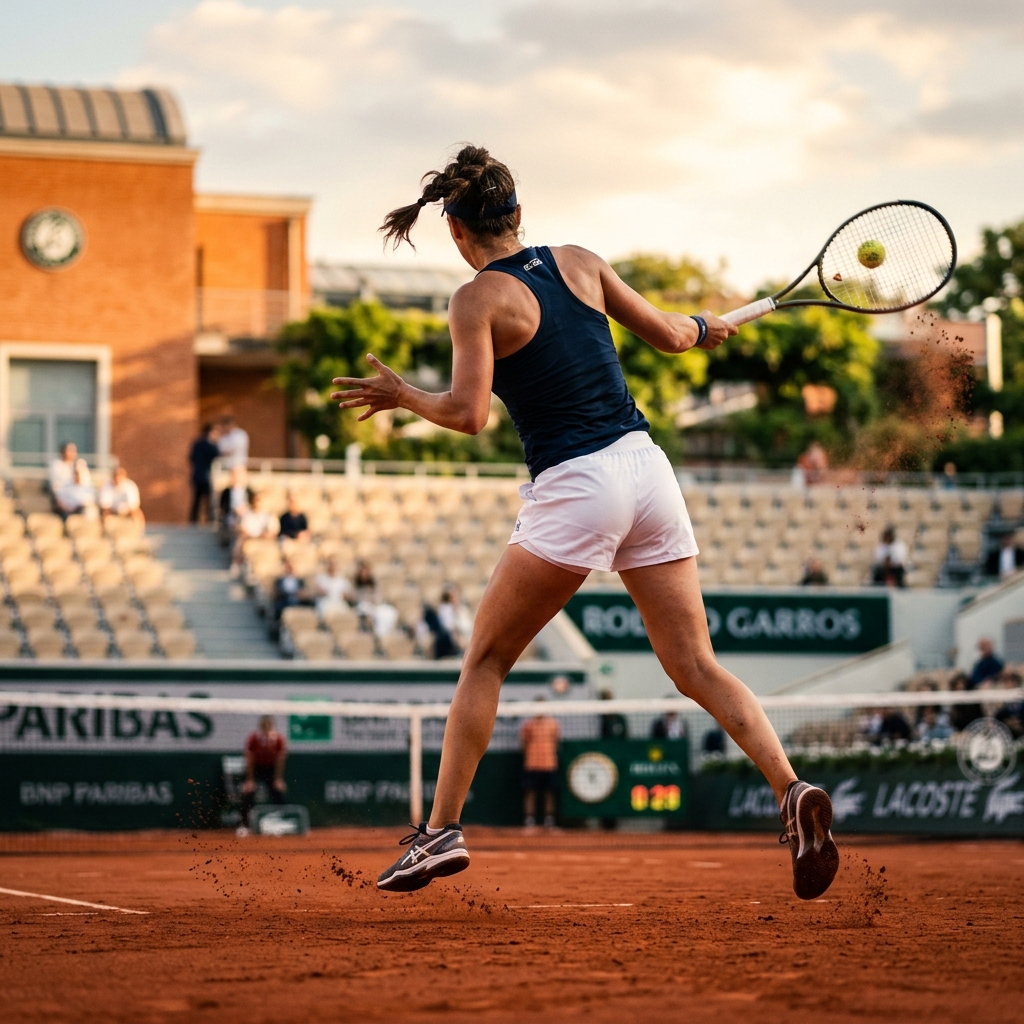
The day’s Challenger action was defined by sharp contrasts: commanding clay-court victories from established names, qualification battles decided by narrow margins, and a handful of three-set matches that underlined the physical demands of the post-grass transition for much of the field. In Bastad, Paula Badosa made the strongest statement among the women’s results, defeating Marina Bassols Ribera 6-3 6-2 with the controlled baseline authority expected of a player looking to build rhythm on clay. Yulia Putintseva also advanced, recovering from a tight opening set to beat Martha Matoula 7-6 6-1, while Simona Waltert and Miriam Bianca Bulgaru progressed with efficient straight-set wins.
Contrexeville produced the day’s most dramatic WTA scoreline, with Rebeka Masarova edging Julia Grabher 7-6 4-6 7-5 in a match that tested both players’ endurance and problem-solving from the back of the court. Francesca Curmi’s 6-4 6-3 win over Oceane Dodin was another notable result, particularly given Dodin’s ability to shorten points when her first strike is landing. Caroline Werner impressed in a 6-1 7-5 victory over Dominika Salkova, while Amandine Hesse handled Barbora Palicova 6-4 6-2. In qualifying, Alicia Herrero Linana was emphatic against Lucie Nguyen Tan, dropping only two games, and Amandine Monnot survived a tighter route past Maria Sara Popa, 7-5 7-6.
On the men’s Challenger circuit, the most dramatic finish came in Bogota, where Luis Carlos Alvarez Valdes defeated Valerio Aboian 7-5 6-7 7-5 in a clay-court contest decided by fine margins across three sets. In Trieste, Matej Dodig’s 6-2 6-4 win over Sumit Nagal stood out as a composed performance against an experienced opponent, while Henri Squire needed two tie-break sets to get past Alvaro Guillen Meza. The qualifying draw in Trieste also delivered strong performances from Enrico Dalla Valle, Georgii Kravchenko and Gonzalo Villanueva, while on the grass in Nottingham, Alastair Gray and Lui Maxted both advanced in straight sets, with Maxted particularly convincing in a 6-3 6-1 win over Antoine Ghibaudo.
Attention now shifts sharply toward Wimbledon, where the marquee men’s schedule features world No. 1 Jannik Sinner against Jan-Lennard Struff and Felix Auger-Aliassime against Novak Djokovic. Sinner’s meeting with Struff carries a clear grass-court edge: the German’s first serve and direct forecourt instincts can make him dangerous on the surface, but Sinner’s balance, return position and capacity to redirect pace remain central to his status as the top-ranked player in the draw. Auger-Aliassime versus Djokovic offers a different tactical profile, with the Canadian’s explosive serving and first-strike tennis set against Djokovic’s return precision, movement economy and match-management experience on grass.
The women’s Wimbledon schedule is headlined by Naomi Osaka against Karolina Muchova, a matchup rich in stylistic contrast. Osaka’s serve and early-strike power will be tested by Muchova’s variety, touch and ability to change rhythm on a low-bouncing surface. Away from the All England Club, the clay Challenger calendar remains dense: Petra Marcinko faces Clara Burel in Contrexeville, Tamara Korpatsch meets Linea Bajraliu in Bastad, and Mayar Sherif opens against Yasmine Kabbaj. With main draws now taking shape across Europe and Wimbledon moving into another decisive day, the coming round should clarify which players are merely surviving the schedule and which are beginning to impose themselves across surfaces.